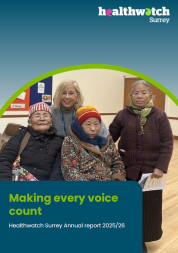
Men in Mind: loneliness, mental health and men’s access to support in Dorking and across Surrey - March 2026
Locally, statistics from the Surrey Health and Wellbeing Strategy Index show that Mole Valley has the highest incidence of suicide of all Surrey boroughs.
The Dorking and Villages Neighbourhood Area Committee (a pilot scheme which Healthwatch Surrey is a part of) has identified loneliness and isolation as one of the most prevalent issues in the area.
This project (through community based face to face engagement and a supporting survey) sought to:
- Identify the impact which loneliness and isolation has on men’s mental health, what is available to support them and how easy it is to find and access
- Explore whether men feel part of a community and what impact that has on their emotional wellbeing and mental health
- Identify if men know what support is available – what that can look like (that it’s not all clinical) - how to access it, and whether it’s well enough promoted.
The findings indicate that – though the majority of men do feel part of their community - there is a clear desire for deeper connection.
- While many men value their existing relationships and sense of inclusion, there is a significant appetite for stronger social ties, greater involvement, and more opportunities to engage locally.
- Men told us that a lack of social ties can lead to feelings of isolation and loneliness and have a significant impact on their mental health.
- Although a lot of men would like to do more to support their emotional wellbeing and mental health, barriers included lack of time, lack of awareness about the range of support and services available and a lack of options which really meet their needs.
Our report makes recommendations based on these findings.
“I wish there were services specifically for men like me - not just general mental health support, but somewhere to talk about….my relationship and my mental health. I need a place where it’s safe to say I’m struggling without feeling guilty or weak. Peer groups, drop-in sessions, or even one to one support would make a huge difference.”