Living, coping, thriving: exploring preventative health behaviours of people aged 50-66 in Surrey - March 2026

The Surrey Health and Wellbeing Strategy was refreshed in early 2022 in response to the COVID-19 pandemic, to ensure it had a greater focus on reducing health inequalities so ‘no-one is left behind.’ A refresh of the strategy, which includes changes to key neighbourhoods and priority populations is due to be approved at the Health and Wellbeing Board on 18 March 2026. Prevention - specifically ‘Supporting people to lead healthy lives by preventing physical ill health and promoting physical wellbeing’ - is Priority 1 of the Surrey Health and Wellbeing Strategy. Prioritising prevention, moving from reactive to proactive care, is also one of the cornerstones of the NHS 10 Year Plan.
Our research focussed specifically on the attitudes of people in their 50s and 60s (those approaching the age range which, statistically, uses the NHS and social care the most) to their own health and wellbeing.
Geographically, we focussed on Spelthorne – the borough with the poorest health outcomes in Surrey - and compared to the rest of Surrey.
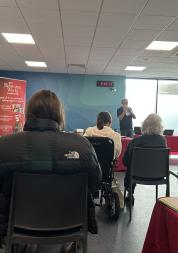
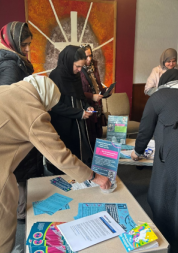
Over 150 people contributed to this research through community engagements, focus groups and our survey.
Key findings
Basic survival beyond health and wellbeing
Some people told us that their first priority was ‘survival’. Finding work, paying rent, accessing food and transport issues are uppermost in their minds, before thinking about their health and wellbeing.
Physical health
Very few people (11%) claim to have excellent physical health, and many have concerns about their future health. Almost two thirds (62%) are unhappy with their weight and would like to weigh less.
Mental health
Although people reported excellent mental health more commonly than excellent physical health, only a small proportion of people rated their mental health as excellent.
Screening and vaccinations
The people we spoke to had reasonably high levels of awareness and uptake of most of the health screening programmes, however, not receiving direct invitations to screening was the main reason for not taking part.
The report makes recommendations based on these findings.
“Human contact is the biggest positive, knowing that people care is more important than any amenities.”