Equality assessment for NHS 10 Year Plan overlooks loss of independent patient voice
Organisations delivering local Healthwatch have warned that the Government’s Equalities Impact Assessment (EQIA) for the NHS 10 Year Health Plan fails to fully consider the impact of losing independent patient voice and scrutiny, as required under the Public Sector Equality Duty (PSED).
The EQIA, published on 17 December, refers extensively to “patient voice” and “patient feedback”, but largely frames these through digital tools such as the NHS App, surveys and experience metrics. Local Healthwatch says this risks confusing data collection with meaningful, independent patient voice and engagement — particularly for people who already face barriers to care.
“Local people rely on their Healthwatch to be their independent voice when navigating the health and social care system, and to be a safe space to share their experiences of care. We hear from residents every day who need help, advocacy, and fairness.”
Local Healthwatch have provided independent oversight of health and care services for over a decade, gathering intelligence from communities through engagement, reports, and direct visits to services. They use this evidence to influence change and hold providers accountable, and guide members of the public to access the services they need. This includes people from marginalised communities, those who have experienced poor or unsafe care, and people who lack confidence in formal or digital systems.
"I am writing to report repeated and serious communication barriers that I have experienced across more than one local hospital, which have had a significant emotional impact."
National evidence supports these concerns. Healthwatch England’s most recent complaints research shows that while almost a quarter of people experience poor NHS care, fewer than one in ten go on to make a formal complaint, and more than half of those are dissatisfied with the process or outcome. This points to deep-rooted issues of trust and confidence that cannot be addressed simply by expanding provider-controlled feedback mechanisms.
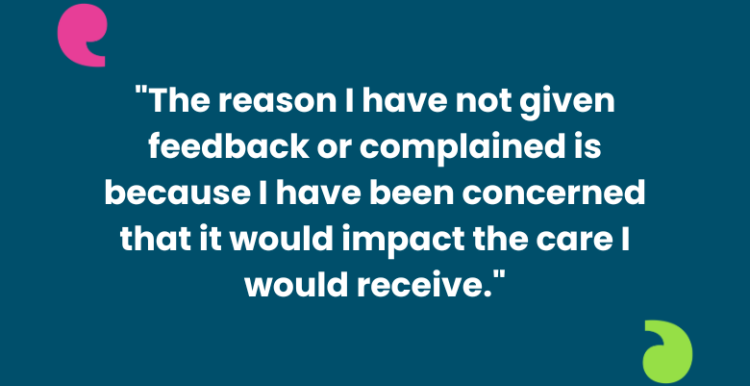
"The reason I have not given feedback or complained is because I have been concerned that it would impact the care I would receive."
The EQIA does not assess the foreseeable risk that marginalised or protected groups may be less willing or able to engage with NHS and local authority feedback routes, nor does it consider the role that independence plays in rebuilding trust, balancing power and ensuring accountability. The Mid Staffordshire NHS Foundation Trust scandal shows the grave failures of an NHS culture that was narrow in its vision and unreceptive to concerns. Healthwatch organisations stress that, without independent scrutiny, NHS bodies at both the national and local levels will be left to “mark their own homework”.
While proposals suggest that the functions of local Healthwatch could be absorbed into Integrated Care Boards and local authorities, there is currently no clear model for how independence, transparency or external scrutiny would be preserved. The EQIA instead places significant emphasis on the NHS App as a primary feedback route, despite longstanding concerns about digital exclusion.
Local Healthwatch is urging the Government to meet its legal duties under the Public Sector Equality Duty by fully considering the equality implications of losing independent patient voice as NHS reforms progress. This is essential to ensure that changes intended to improve patient experience do not inadvertently widen health inequalities.